Clinton County Dog Registration Information
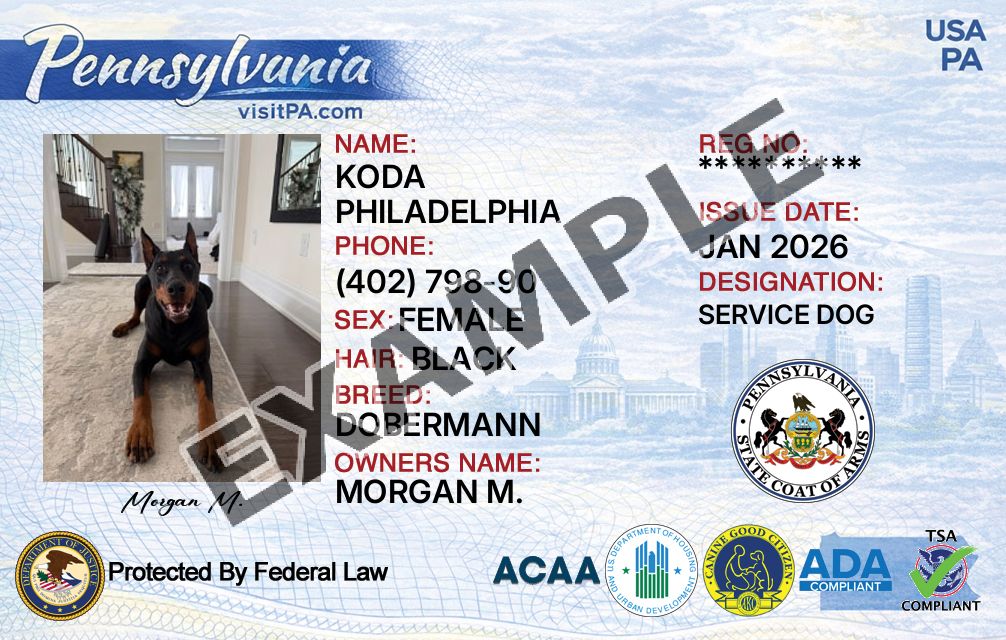
Service Dogs and Emotional Support Animals in Clinton, Pennsylvania
If you’re asking where do I register my dog in Clinton County, Pennsylvania for my service dog or emotional support dog, the key thing to know is this: a service dog or emotional support animal (ESA) does not get a special “registration” through the county. What you generally need is a valid dog license in Clinton County, Pennsylvania (required for most dogs under Pennsylvania law), plus current rabies vaccination documentation, and—only if applicable—separate documentation related to housing or workplace accommodations.
Where to Register or License Your Dog in Clinton County, Pennsylvania
Licensing is usually handled locally. Below are examples of official or locally relevant offices and agencies that residents commonly contact for dog licensing, dog law questions, animal control-related guidance, and rabies/dog law enforcement direction in Clinton County, Pennsylvania. Always call ahead to confirm current procedures and whether an appointment is required.
Primary Dog Licensing Office (County Level)
| Office name | Clinton County Treasurer |
|---|---|
| Street address | 2 Piper Way, Suite 124 |
| City / State / ZIP | Lock Haven, PA 17745 |
| Phone | (570) 893-4004 |
| Not listed on the referenced office page. | |
| Office hours |
8:00am – 5:00pm (Mon, Tues, Thurs, Fri) 8:00am – 12:30pm (Wed) |
This is the standard office used to obtain a dog license in Clinton County, Pennsylvania (in person or by mail, depending on current procedures).
Local Government Contact (City Example)
| Office name | City of Lock Haven (City Office) |
|---|---|
| Street address | 20 E Church St |
| City / State / ZIP | Lock Haven, PA 17745 |
| Phone | (570) 893-5900 |
| Not listed on the referenced contact page. | |
| Office hours | Monday – Friday, 8:30am – 4:30pm (by appointment) |
If you live inside a borough/city and are unsure about local animal ordinances, this kind of municipal office can help point you to the correct enforcement contact. Dog licensing itself is typically handled through the county treasurer.
Local Shelter Resource (County Example)
| Office name | Clinton County SPCA |
|---|---|
| Street address | 33 Mill Hill Road |
| City / State / ZIP | Lock Haven, PA 17745 |
| Phone | (570) 748-4756 |
| ccspca@comcast.net | |
| Office hours | Mon – Fri, 12:00pm – 7:00pm |
Shelters often help residents understand local processes (lost dogs, strays, and general guidance). Your official licensing authority remains the county treasurer.
State-Level Dog Law & Rabies/Dog Warden Enforcement (Reference)
While your dog license is typically issued locally, Pennsylvania’s Bureau of Dog Law Enforcement supports statewide dog law enforcement and oversight. If you need guidance on dog warden functions, dangerous dog procedures, or where to route certain complaints, this is the statewide reference point.
| Office name | Pennsylvania Department of Agriculture — Bureau of Dog Law Enforcement |
|---|---|
| Street address | Not listed on the referenced bureau page. |
| City / State / ZIP | Not listed on the referenced bureau page. |
| Phone | (717) 787-3062 |
| ra-agdoglaw@pa.gov | |
| Office hours | Not listed on the referenced bureau page. |
If your question is strictly “where to register a dog in Clinton County, Pennsylvania,” start with the Clinton County Treasurer for licensing.
Overview of Dog Licensing in Clinton County, Pennsylvania
What a Dog License Is (and Why It Matters)
A dog license is an official license issued under Pennsylvania dog law, typically processed through your local county treasurer. In practical terms, it is the government record that links a dog to an owner and address and confirms that you’ve paid the required fee. If your dog is ever found running at large, the license tag can help officials and shelters quickly identify you as the owner.
Do Service Dogs or Emotional Support Dogs Need a County License?
In most cases, yes: being a service dog or an emotional support dog does not replace the requirement to obtain a dog license in Clinton County, Pennsylvania. A county dog license is about animal identification and compliance with state/local rules; it is not the same thing as “certifying” a disability-related assistance animal.
Rabies Vaccination: Common Requirement You Should Plan For
Rabies vaccination is commonly required for dogs, and it often ties into licensing or enforcement expectations. While dog licensing and rabies rules are not the same legal concept, they are closely connected in day-to-day enforcement and record-keeping: you should keep rabies paperwork current and easy to provide when you apply for or renew a license, when boarding, and when requested after a bite incident.
If you’re searching “animal control dog license Clinton County, Pennsylvania,” you’re usually looking for the county’s official licensing authority (the Treasurer) plus the correct enforcement contact (often a dog warden or local police, depending on the situation).
How Dog Licensing Works Locally in Clinton County, Pennsylvania
Start With the County Treasurer (Typical Licensing Path)
For most residents, the simplest answer to where to register a dog in Clinton County, Pennsylvania is: license your dog through the Clinton County Treasurer. County treasurer offices commonly handle applications, collect fees, and issue the license/tag. In Clinton County, the treasurer’s office provides office hours and a mailing address for submitting applications.
What You’ll Do: In-Person or By Mail (and Sometimes Online)
Counties often allow licensing in multiple ways—such as bringing an application to the treasurer’s office, mailing it in, and in some places offering an online payment option. Because procedures can change, it’s smart to call the office before you go, especially if you need same-day processing or have a special circumstance (new resident, recently adopted dog, or replacement tag).
Annual vs. Lifetime Licenses (What “Lifetime” Usually Means)
Pennsylvania dog licensing is often offered as an annual license and a lifetime license. A lifetime license typically requires permanent identification (commonly microchip or tattoo), because the entire point is to ensure the dog can be reliably identified across years. If you’re deciding between annual and lifetime, consider how stable your contact information is and whether your dog already has permanent ID. If you move, you still may need to update your address with the relevant licensing authority so the record remains useful.
Dog Law Enforcement and “Animal Control” Questions
Many people say “animal control” when they mean: stray dogs, dogs running at large, dog bites, dangerous dog claims, kennel concerns, or rabies-related enforcement. In Pennsylvania, these issues can involve multiple layers:
- Local level: local police departments and municipal officials may respond to immediate public safety concerns.
- County level: the county license office is typically the treasurer (licensing and tags).
- State level: Pennsylvania’s Bureau of Dog Law Enforcement oversees dog wardens and certain enforcement functions statewide.
Service Dog Laws in Clinton County, Pennsylvania
Service Dog vs. Dog License: Two Different Things
A service dog is generally defined by what the dog is trained to do—performing tasks for a person with a disability—while a dog license is a local/state legal requirement tied to dog ownership. In other words:
- Service dog status relates to disability rights and public access rules.
- A dog license in Clinton County, Pennsylvania relates to legal ownership compliance and identification.
Getting a county license does not “turn” a dog into a service dog. Likewise, having a service dog does not automatically replace licensing requirements.
Do You Need a “Service Dog Registration” Card?
In most situations, no government-issued “service dog registration” is required to recognize a legitimate service dog. Be cautious about any site that claims you must pay for a registration to make your dog “official.” What matters is whether the dog is trained to perform disability-related tasks and whether you follow applicable rules for control and behavior in public.
Best Practice: Keep Core Documents Organized
Even though service dog laws focus on training and tasks rather than paperwork, it’s still wise to keep your dog’s rabies certificate, veterinary records, and your dog license/tag information organized. This helps with everyday needs like travel, boarding, and resolving issues if your dog is lost.
Emotional Support Animal Rules in Clinton County, Pennsylvania
ESA vs. Service Dog: Not the Same Legal Category
An emotional support animal (ESA) provides comfort by its presence, but it is not necessarily trained to perform disability-related tasks. This distinction matters because ESAs typically do not have the same public-access rights as service dogs. An ESA may be relevant in certain housing contexts, but it is not the same as a service animal trained for specific tasks.
Does an ESA Need a Dog License in Clinton County, Pennsylvania?
Yes, in most cases. An ESA is still a dog under state and local rules, so you should obtain and maintain a current dog license in Clinton County, Pennsylvania and keep rabies vaccination current. If you’re searching for where to register a dog in Clinton County, Pennsylvania specifically because it’s an ESA, the answer is still the county licensing office (and not a third-party registry).
Avoid Confusion: “ESA Letters” vs. County Registration
Some people confuse an ESA-related clinical letter (used for certain accommodation requests) with “registering” the animal. A county dog license is a government-issued license/tag; it is separate from any documentation used for accommodation requests. If you need help understanding what your landlord can request, consider contacting an appropriate local legal aid or housing resource—but for licensing, use the official county process.
Frequently Asked Questions
For official registration/licensing, you typically obtain a dog license in Clinton County, Pennsylvania through the Clinton County Treasurer. Service dog status and emotional support animal status are separate from licensing; they do not require a county “service dog registration” to be valid.
Yes. Most licensing is handled locally through the county treasurer’s office. That’s why searches like “where to register a dog in Clinton County, Pennsylvania” usually lead you to county government licensing information rather than state-only agencies.
- Dog license: a local/state-required license and tag connected to ownership and identification.
- Service dog legal status: based on disability-related training and tasks the dog performs, not a paid registry.
A service dog is trained to perform tasks for a person with a disability. An ESA provides comfort by presence but is not necessarily task-trained. Both may be important to a person’s wellbeing, but they are treated differently under many laws—especially regarding public access. Regardless, both are still dogs and typically need a county dog license.
For immediate safety issues, contact your local police or emergency services. For licensing questions, contact the county treasurer. For dog law enforcement guidance and certain complaint routing, Pennsylvania’s Bureau of Dog Law Enforcement is a statewide resource.
If you’re specifically searching for “animal control dog license Clinton County, Pennsylvania,” remember those are often two related but separate needs: licensing is handled through the treasurer, while enforcement response depends on the incident type and jurisdiction.
Disclaimer
Licensing requirements and office locations may change. Residents should verify details with their local animal services office within Clinton County, Pennsylvania.
Register A Dog In Other Pennsylvania Counties
Select your county below to get started with your dog’s ID card. Requirements and license designs may vary by county, so choose your location to see the correct options and complete your pup’s registration.
- Adams County Dog Registration
- Alleghany County Dog Registration
- Armstrong County Dog Registration
- Beaver County Dog Registration
- Bedford County Dog Registration
- Berks County Dog Registration
- Blair County Dog Registration
- Bradford County Dog Registration
- Bucks County Dog Registration
- Butler County Dog Registration
- Cambria County Dog Registration
- Cameron County Dog Registration
- Carbon County Dog Registration
- Centre County Dog Registration
- Chester County Dog Registration
- Clarion County Dog Registration
- Clearfield County Dog Registration
- Columbia County Dog Registration
- Crawford County Dog Registration
- Cumberland County Dog Registration
- Dauphin County Dog Registration
- Delaware County Dog Registration
- Elk County Dog Registration
- Erie County Dog Registration
- Fayette County Dog Registration
- Forest County Dog Registration
- Franklin County Dog Registration
- Fulton County Dog Registration
- Greene County Dog Registration
- Huntingdon County Dog Registration
- Indiana County Dog Registration
- Jefferson County Dog Registration
- Juniata County Dog Registration
- Lackawanna County Dog Registration
- Lancaster County Dog Registration
- Lawrence County Dog Registration
- Lebanon County Dog Registration
- Lehigh County Dog Registration
- Luzerne County Dog Registration
- Lycoming County Dog Registration
- McKean County Dog Registration
- Mercer County Dog Registration
- Mifflin County Dog Registration
- Monroe County Dog Registration
- Montgomery County Dog Registration
- Montour County Dog Registration
- Northampton County Dog Registration
- Northumberland County Dog Registration
- Perry County Dog Registration
- Pike County Dog Registration
- Potter County Dog Registration
- Schuylkill County Dog Registration
- Somerset County Dog Registration
- Sullivan County Dog Registration
- Susquehanna County Dog Registration
- Synder County Dog Registration
- Tioga County Dog Registration
- Union County Dog Registration
- Venango County Dog Registration
- Warren County Dog Registration
- Washington County Dog Registration
- Wayne County Dog Registration
- Westmoreland County Dog Registration
- Wyoming County Dog Registration
- York County Dog Registration